Which floor actually survives a Houston apartment turn
A unit turn is judged in days and in how the floor looks two tenants later. Those are different tests, and only some materials pass both.
September 8, 2026 · 4 min read
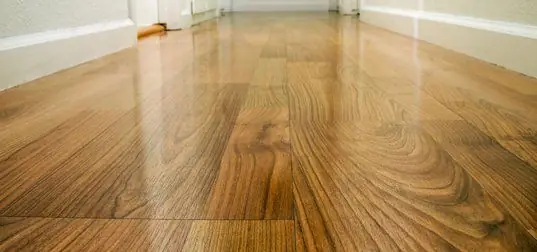
On a unit turn the floor is the item every other trade waits on. Paint can happen around it. Appliances can land the morning of. The floor cannot, because until it is down and walkable, nothing else in the unit is finished. That single fact quietly decides most flooring choices in multi-family, and it explains why the material that wins is rarely the one that looked best in the sample book.
There are really two tests. The first is how fast the unit can be handed back. The second is how the floor looks after two more tenants have lived on it. A material can pass one and fail the other, and the ones that fail usually fail the second test, quietly, about eighteen months after somebody was pleased with the price.
Why vinyl plank takes the corridors and most of the living space
Vinyl plank ends up in apartments, hospitals and grocery stores for the same four reasons every time. It resists dents. It resists scratches. It does not stain. It cleans in a single pass with no routine and no specialist product. Put those together and you have a surface that tolerates furniture being dragged in on move-in day and a spill that sits until somebody notices.
The other half of the argument is what it looks like. A prospective tenant standing in a doorway sees a wood floor. They are not going to kneel down and study the wear layer. That gap between how the material reads and what it actually tolerates is the whole case for vinyl plank, and it is why it has taken over so much of the market that used to belong to laminate.
It also lays fast, which matters when the schedule is the job. A crew that can get a unit down and walkable the same day is worth more to a property manager than a crew that saves a little on material and costs a day.
Where carpet still earns its place
Carpet has not gone away in multi-family, and the places it survives are the places it is genuinely better. Bedrooms, because tenants like waking up onto something warm. Stairs, because a slip on a hard stair tread is a different category of problem to a slip on a level floor. Upper-floor units, because carpet is the only floor covering that meaningfully reduces what the neighbour underneath hears.
The mistake is treating carpet as one product. There is an enormous distance between a tight low-pile loop built for a hallway and a soft cut pile built for a bedroom, and putting the second one where the first belongs is how a carpet gets replaced in a year. We supply Mohawk, Shaw and Beaulieu, and most of the useful conversation is about matching the construction of the carpet to the traffic it will actually see.
Where tile is worth the extra day
Tile costs more time on the schedule, and in the wet areas it is usually still the right answer. Entryways, bathrooms and kitchens take standing water and grit in a way no plank product enjoys. Porcelain in particular takes traffic that ceramic will not, and it is worth knowing that the two are not interchangeable even though they get sold side by side.
The Houston consideration is worth naming. A lot of housing stock here sits on slab, and slabs on our clay move with the seasons. Movement joints in a large tiled area are not decoration, and neither is the decision about where they go. On a big lobby or a long corridor that call is made before the first tile is fixed, and it decides whether you get hairline cracking down the line.
The transitions are where turns actually go wrong
If you want to know whether a floor was installed by somebody paying attention, look at the doorways. A threshold is where two materials, two heights, two grain directions and two expansion habits have to resolve in about four inches. It is the first place a floor lifts, the first place a strip works loose, and the first thing a tenant trips on.
It is also the part that gets rushed when a job is split across three subcontractors, because the transition belongs to whoever turns up last and nobody priced it properly. Running the whole floor package through one contractor removes that argument entirely, which is a large part of why we bid buildings rather than rooms.
What to bring to the conversation
If you are pricing a turn programme, the three things that shape the answer are the window you can close the unit for, the traffic the space really sees, and how long you intend to hold the asset. Tell us those and we will tell you honestly which materials fit, including when the cheaper one is the right call.
Bids and estimates are free, on a single unit or on every unit in the building. Quality Interiors is City of Houston Section 3 certified and Texas HUB certified, certification number 1273987515600, which is often the reason we get the first call on public and assisted housing work.
Quality Interiors LLC, (713) 501-1304
Call (713) 501-1304More articles
Ceramic, porcelain, travertine, granite, marble: what each one actually does
They get sold side by side and talked about together. They do not behave the same way, and the differences show up in year three.
Why floors fail at the threshold first
Nobody photographs a doorway. It is still the part of the floor that tells you the most about who laid it.